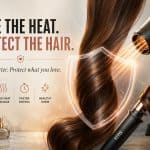
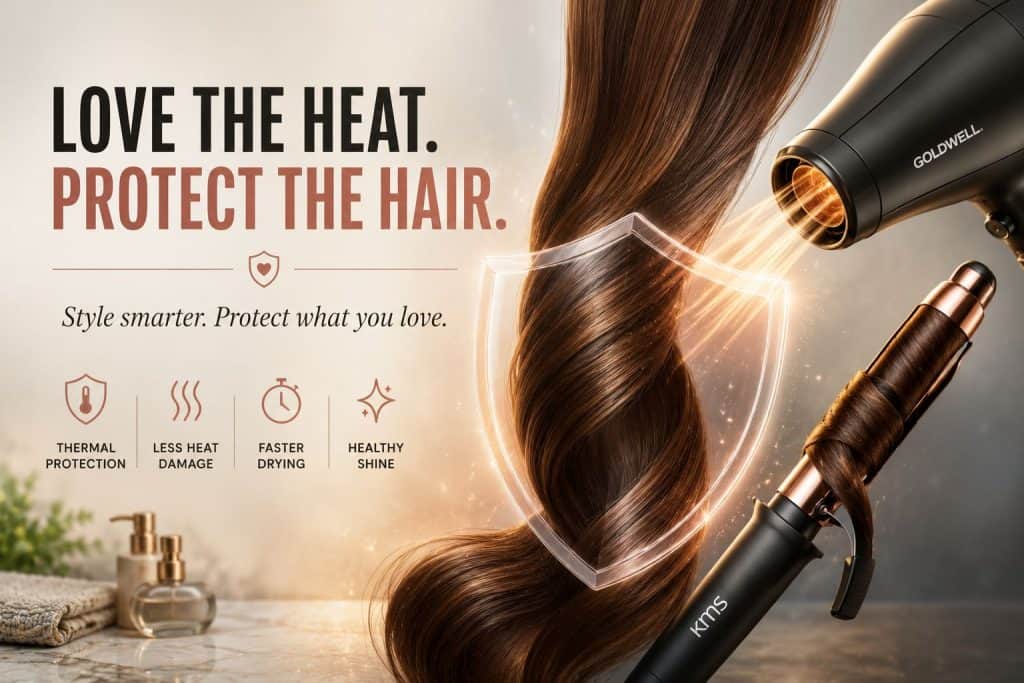
A heat protectant for hair is one of those products I think almost everyone who regularly blow dries, curls or flat irons their hair should understand.
I am also realistic. I am not going to tell you to stop using hot tools if they are part of how you like to wear your hair.
Instead, I would rather help you protect your hair, use heat more intelligently and spend less time working the same areas over and over.
Especially during the Oklahoma summer, when your hair may already be dealing with sun, heat, humidity and swimming, a few changes in the way you style can make a difference.
Heat Protection Starts Before the Hot Tool
One of the most important things to remember about thermal protection is timing.
Do not wait until after you have finished styling to think about protecting your hair.
A thermal protectant is designed to be part of the styling process before the hair is exposed to heat. Depending on the product, that may mean applying it before blow drying or before using a curling iron or flat iron.
I like professional products that give us thermal protection while also helping us create the finished style.
Goldwell and KMS both have products I use and recommend depending on the client’s hair, texture and styling routine.
The important part is choosing the right product and actually using it correctly.
More Heat Does Not Always Mean Better Hair
One habit I see is automatically turning a hot tool to its highest temperature.
Hotter is not always better.
Your hair type, condition and color history all matter when deciding how much heat is appropriate.
Fine hair does not necessarily need the same temperature as thick, coarse hair. And hair that has been lightened or is already compromised deserves additional consideration.
If your curling iron works at a lower temperature, there is no benefit in automatically turning it all the way up.
The goal is to use enough heat to create the style without exposing your hair to more than it needs.
Repeated Heat Can Be Just as Important as Temperature
Temperature is only part of the conversation.
Think about how many times you go over the same piece of hair.
You blow dry it.
Then you flat iron it.
Then maybe you decide to curl it.
The next morning, you touch it up again.
That one section of hair may experience heat over and over during the week.
This is why I like to think about the entire styling routine rather than focusing only on one tool.
If we can make the hair easier to dry, easier to smooth and easier to style, we may be able to reduce some of that repeated exposure.
Faster Drying Can Mean Less Time Under Heat
Sometimes protecting your hair is not about eliminating heat. It is about reducing how long you need it.
This is one reason I pay attention to products that help with drying and styling.
If we can make the hair more manageable and help it dry efficiently, you may spend less time holding a blow dryer over the same areas.
For some clients, air styling can also be useful.
That does not necessarily mean completely air drying your hair and hoping for the best. There are products designed to support air drying and natural texture so you can reduce some of your blow drying when it works for your hairstyle.
Even allowing the hair to partially air dry before finishing the style can sometimes reduce the amount of time you spend under heat.
The right approach depends on your hair.
Conditioned Hair Is Usually Easier to Work With
If your hair is extremely dry, rough or tangled, styling can become more difficult.
You may spend longer blow drying it, make more passes with your brush or flat iron, and use additional heat trying to create shine and smoothness.
That is why I look at conditioning and styling as connected.
Especially at the end of summer, I see hair that has been exposed to Oklahoma sun, swimming, vacations, humidity and months of styling.
Sometimes improving the condition of the hair can make your normal styling routine easier too.
Healthy looking hair should have softness, movement and shine before we ever reach for a curling iron.
Keratin Can Be Another Part of the Conversation
For someone who spends a lot of time fighting frizz or smoothing her hair every morning, a keratin treatment may also be worth considering.
This is one of the reasons I like keratin for certain clients.
The benefit is not simply straighter hair.
If the hair becomes easier to manage, dries faster and requires less work to smooth, you may naturally spend less time using hot tools.
That can be a big lifestyle benefit for someone who feels like styling her hair has become a daily project.
Your Products Should Match How You Actually Style Your Hair
I do not believe everyone needs ten different styling products.
I would rather know what you actually do with your hair.
Do you blow dry every morning?
Do you wash twice a week and then touch up your curls?
Do you flat iron?
Do you mostly air dry?
Is humidity causing you to restyle your hair throughout the day?
Those answers help determine which products make sense.
Goldwell and KMS both offer professional styling products with thermal protection and products designed to make styling or air drying easier. I like being able to choose products based on what the client is actually trying to accomplish rather than simply adding another bottle to the bathroom counter.
Frequently Asked Questions
Do I really need a heat protectant for hair?
If you regularly use a blow dryer, curling iron, flat iron or other hot styling tools, thermal protection is something I recommend discussing as part of your routine.
Do I need heat protectant before blow drying?
Many thermal protection products are designed to be applied before blow drying. Always follow the directions for the specific product because professional styling products can be formulated for different uses.
Should I use heat protectant every time I curl my hair?
If you are exposing your hair to high temperatures again, you should consider how your thermal protection product is intended to be used. Some products are designed specifically for use with hot tools on dry hair.
What temperature should I use on my curling iron or flat iron?
There is not one temperature that is right for everyone. Hair texture, density, condition and color history all matter. I generally prefer using the lowest temperature that effectively creates the style you want.
Can air drying help prevent heat damage?
Reducing the amount of time your hair is exposed to heat can help reduce unnecessary thermal stress. Air drying or partially air drying can be useful for some hair types, especially when paired with products designed to support natural texture and air styling.
Is heat worse for blonde or color treated hair?
Lightened and color treated hair may require additional consideration depending on its condition. This is why I look at your color, texture, condition and styling habits together rather than treating them as separate issues.
You Do Not Have to Give Up the Style You Love
Protecting your hair does not mean you have to stop curling it, blowing it out or creating the polished style you love.
It means being smarter about how you get there.
Use thermal protection. Do not automatically use more temperature than you need. Avoid repeatedly working the same sections when possible. Keep your hair properly conditioned. And choose styling products that help you accomplish the look with less effort.
My goal is not to take your hot tools away.
It is to help you have beautiful hair today while protecting what we want to do with your hair tomorrow.